
Subscribe to continue reading
Become a paid subscriber to get access to the rest of this post and other exclusive content.
Become a paid subscriber to get access to the rest of this post and other exclusive content.
“Instead of obtaining myself by fleeing, I find myself forsaken, alone, tossed into a dimensionless cubicle, where light and shadow are quiet ghosts. In my interior I find the the silence I seek. But in it I become so lost from any memory of a human being and of myself that I make this impression into the certainty of physical solitude. If I were to scream – already without lucidity I imagine – my voice would receive the same, indifferent echo of the walls of the earth.”
– Clarice Lispector, Near to the Wild Heart
Sometimes the solitude feels like a life-sentence and all the pacing feels hollow. The walls the chairs the scenery — it all feels so dull and permanent and shallow and not even Brahms can stir some romanticism me. It’s just Don Henley singing Desperado, “Freedom, oh freedom well, that’s just some people talkin’. Your prison is walking through this world all alone… Why don’t you come to your senses? Come down from your fences?”
Fucking bastard. You come to your damn senses Don.
But he’s always talking about the devil and that speaks to me, even at times like this, especially at times like this. Where is he? That little red demon? How much does he want? What’s the asking price? Take my soul, it’s yours, I’ve had enough of it. Take it away. Do what thou wilt with it.
I think of Cincinnatus C in Invitation to a Beheading, sentenced to death but never to know the exact hour, made to wait in a cell indefinitely until the day of his beheading to wait and think and go mad. He writes, “I am here through an error – not in this prison, specifically – but in this whole terrible, striped world; a world which seems not a bad example of amateur craftsmanship, but is in reality a calamity, horror, madness, error – and look, the curio slays the tourist, the gigantic carved bear brings it’s wooden mallet down upon me.”
What a comforting thought, to be in reality only a tourist on this massive spherical rock and thus sentenced to death for not fitting into the grand design. To never have been a real part of it all and thus relinquish all responsibility for the dispassion of it all, the dirt, the sterilization, the perpetual cycles of maintenance — and for what?
I think of Peggy Lee singing, “I know what you must be saying to yourselves, if that’s the way she feels about it why doesn’t she just end it all? Oh, no, not me, I’m not ready for that final disappointment.”
Even as a child I was never haunted by death so much as how sickening it would be when it finally came and I found that in fact it is not climactic at all — just routine like everything becomes sooner or later. Still sometimes it’s only this horrifying thought which keeps me from wandering bridges alone at night or standing too close to the edge of the train platform.
Is this all there is? You see them all, on all the screens, what are they all doing in there? Little busy bees in a little box doing all sorts of things, producing, performing, talking, running, going god knowns where but they’re just there, projections in a little hand-held box, and presumably they’re also out there somewhere on this obscene hurling rock. And you’re here, wherever this is, here where the dimensions have gone flat and even the ghosts are staying quiet today. Of course you’re in the little box too, but it’s too late for that talk tonight.
And then I remember Peggy, “If that’s all there is my friends, then let’s keep dancing. Let’s break out the booze and have a ball.” And today maybe that means cheating on the moon and crawling into bed already, let the search for meaning clock out early this once. For isn’t Patti Smith always saying, “Tomorrow something wonderful might happen.”

“The little girl’s sense of secrecy that developed at prepuberty only grows in importance. She closes herself up in a fierce solitude: she refuses to reveal to those around her the hidden self that she considers to be her real self and that is in fact an imaginary character: she plays at being a dancer like Tolstoy’s Natasha, or a saint like Marie Leneru, or simply the singular wonder that is herself. There is still an enormous difference between this heroine and the objective face that her parents and friends recognize in her. She is also convinced that she is misunderstood: her relationship with herself becomes even more passionate: she becomes intoxicated with her isolation, feels different, superior, exceptional: she promises that the future will take revenge on the mediocrity of her present life. From this narrow and petty existence she escapes by dreams.”
– Simone de Beauvoir, The Second Sex
“Being a woman, she still felt it necessary to pose conditions; to withdraw herself further into secrecy as this man encroached.”
– Lawrence Durrell, The Alexandria Quartet, Balthazar
I have this deviant little fantasy, this manipulative abstract scene that plays sometimes in my head. Someone is ruffling through piles of papers on a desk, they are searching for me but I’m sitting right in front of them. They’re throwing the papers around trying to get to the bottom of the piles, trying to arrange them in such a way that they make sense. They grow aggravated and they shout at me “Who are you?!” “Where are you?” “Why don’t you show yourself?” “Stop playing this game!” “You are here somewhere, you have to be!” “Tell me, what is the meaning of all this? I demand to know!”
I’m all those papers with scribbles and text and black and white prints piled high on every surface, lining the walls. But I’m also sitting in the middle of the room, starring blankly back at them with my big brown sloe eyes and a neutral appeasing grin. The idiotic pathetic grin of a check-out girl who just wants her shift to end and has resigned herself for the next few hours before she’s off the clock and can be her real self again, acknowledge her emotions again. You can’t penetrate the thick exterior she threw on like a uniformed cloak to get through those wasted hours that she trades for a handful of dimes. My grin makes them even more flustered and exasperated.
They desperately shake me and grab hold of my hands and pry my fingers open to find nothing, they open my eyelids wide and peer into my ears and look deep into my mouth and down my throat, they lift up my arms to see if I’m hiding anything under there and they glare at me and search my body over with their gaze hoping something will reveal itself.
Oh but how reality can be even stranger than fiction.
It almost happened to me exactly that way once. At a hotel restaurant in Palm Springs in August, having dinner. There where the desert is more than 100° during the day; and while most people escape there in the winter, he took me there to celebrate my birthday in the middle of the summer. We drove the two hours from Los Angeles in his vintage black Porsche, hardly saying a word — anyways I hate talking in cars and the windmills were so big and the temperature was so high that the air above the tarmac quivered before us on the wide open road and thus the scenery really required all of my attention — surely you can understand.
We took a room in a Spanish Colonial-style hotel built in the 1930s, around the corner from the art museum, he knew my tastes well. The walls and the floors were either stone or tiled with mosaics. He always liked me best in hotels, airports, train stations — every time we met it was in a hotel bar or train station lobby or short-rental apartment, always a transitory space. But that night the hotel restaurant wasn’t that of our hotel’s — even from our hotel we had to venture to another transitory place. Some nights we could go to three, even four different hotels in one evening. A glass of champagne there, a Negroni there, a few tumblers of choice whisky there, a nightcap from the mini-bar in his room later.
I digress, back to the Ace hotel restaurant in Palm Springs. I don’t like Ace hotels, they try too hard to be interesting, it only makes them unbearably banal.
We sat across from each other in the booth, like we had done so many times already that summer. I couldn’t think of anything to say, I probed every nook and cranny of my mind — nothing. I searched the room over for an original remark to make, I bit my lip, I hoped and prayed that something would surface. “Say something, what is wrong with you, why don’t you say anything, think of something — anything,” my mind barked orders at me. He was going on about something, something about his mother, his childhood, I listened attentively, like I always do. Perhaps not as attentively as I thought, because suddenly I looked up from my plate and the reprimands weren’t coming from the voice in my head anymore but the man in front me. Had I stayed silent for so long I had passed the threshold and finally gone mad? No, it was real, he was repeating the orders back at me — him sitting across from me, in flesh and blood.
He was there before me throwing the papers around the room, violently inspecting all my bits, “Where are you?” “Show yourself!” “Say something!” “Stop this now!” “You can’t go on like this!” But how can you stop the absence of something, which by its very nature isn’t there to begin with? Is the opposite of fire water, or is it the absence of fire? I don’t know, but I can tell you either way it doesn’t feel good to get burnt. It didn’t feel even a little bit good hear him say those things.
But it’s not about good or bad here, and my father once told me there’s nothing inherently wrong with being misunderstood. And the secrets and the solitude, do we hold onto them to preserve our sense of self, or to extinguish our flames and make ourselves smaller than we need to be? Whatever the reason, I know I’m not the only one. Why it’s a tale as old as identity itself, manifold myths and books and poems have been written about it.
It even rear’s its perplexing head in pop culture. The Zombies singing, “Well, let me tell you ’bout the way she looked / the way she’d act and the color of her hair / her voice was soft and cool / her eyes were clear and bright / but she’s not there / Please don’t bother tryin’ to find her / she’s not there.”
Cohen’s immortal melody, “There was a time you let me know / what’s really going on below / But now you never show it to me, do you?”

Become a paid subscriber to get access to the rest of this post and other exclusive content.
“Freedom isn’t enough. What I desire doesn’t have a name yet.”
– Clarice Lispector, Near to the Wild Heart
I once wrote that I’ll know I’m free of you when I stop listening to your song to fall asleep. When I stop searching for your arms in everyone who shares my bed, stop searching for your sideways glances — always appearing to look just beyond me, too afraid or uninterested to look directly at me. When I stop digging back into the depths to feel again that imprint that is us together, like a small relief left on a down cushion. We were an imprint, you and me. It’s all you let us be and really all we could be. I know that now. We were something beyond time, only to exist in a liminal space, not fit for the relentless rhythm of life.
I don’t think of you anymore to fall asleep. I think of my white room somewhere in Greece, or Spain, or maybe Portugal or Italy — I haven’t decided yet. For some reason it’s always in Greece when I visit it, the only country of the list I haven’t been to, perhaps that’s why.
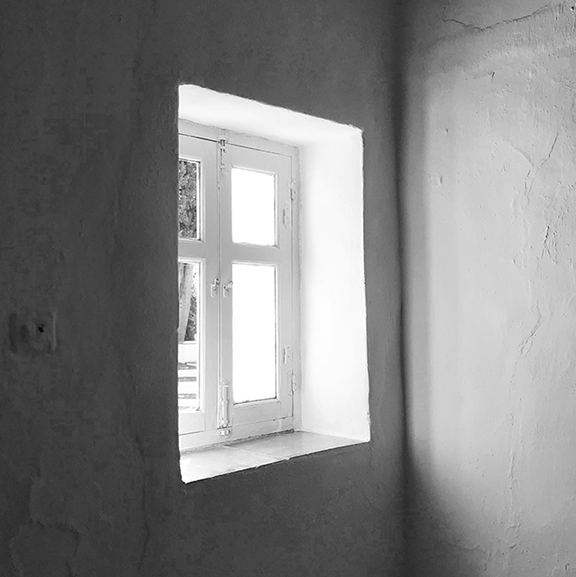
It’s not bright in my room but it’s cool with white stone walls and through my window, though not a large window, I can see the blue of the ocean expand before me. In the morning I can hear the sea birds and I have an unlacquered wooden table that faces the windowed wall and an equally old wooden chair, the seat polished and worn down from years of use. The floor is also stone, maybe wood — no stone. There’s thin linen sheets with delicate lace patterns on the bed, not the loose modern linen you get these days but the thick fibered heavy starched linen of your grandmother. On the floor there’s one shabby threadbare rug, I think of all the many people who once stepped on it, wherever it was — now only I step on it.
There I can breathe and I wear dresses and I smile at strangers and take the time to look people in the eye. Because there I’m whole and I can gently smooth out the impressions they leave on me — they don’t chip pieces of me away. I have so much to give and it pours out of me. Here I don’t mind the light, I live in harmony with it.
The way it dances in the morning rising over the water and quiets everyone around mid-day with its brilliance. Its firm, fiery hand on you in the afternoon — flattening you and forcing you to move slowly, methodically. It’s pressure which makes it impossible to rush. If you fight against it you will never win, only throw yourself into a tizzy of your own making — better to save face and accept your fate. So you wait and watch, and in the evening the shadows get longer and still you wait. Until the final hour and the dusk brings a tender melancholy of another day passed, another day coming soon to take its place. The relentless rhythm.
Here I rest lightly and freely. I can hear myself breathe and my hair is always thick and wild and full of sunlight and salt and emotions left to linger. Here they are allowed to stay, or go, just as they please.
It’s true before I had my room I had you. You weren’t much light but you beat the darkness. I liked your simplicity, like my room you were traditional, blank, and sparse really — straightforward. I didn’t have to hide and you let me be.
Your song, how did it go? The buffaloes? The delicate guitar picks and droning harmonica? “All roads lead to roam with the buffaloes. And the buffaloes used to say be proud of your name… be what you are… roam where you roam… do what you do. You’ve gotta have a wash but you can’t clean your name. You’re not called Jimmy you’ll be Jimmy just the same. The keys are in the bag in the chest by the door, and one of Jimmy’s friends has taken the floor.” We never figured out what it all meant.
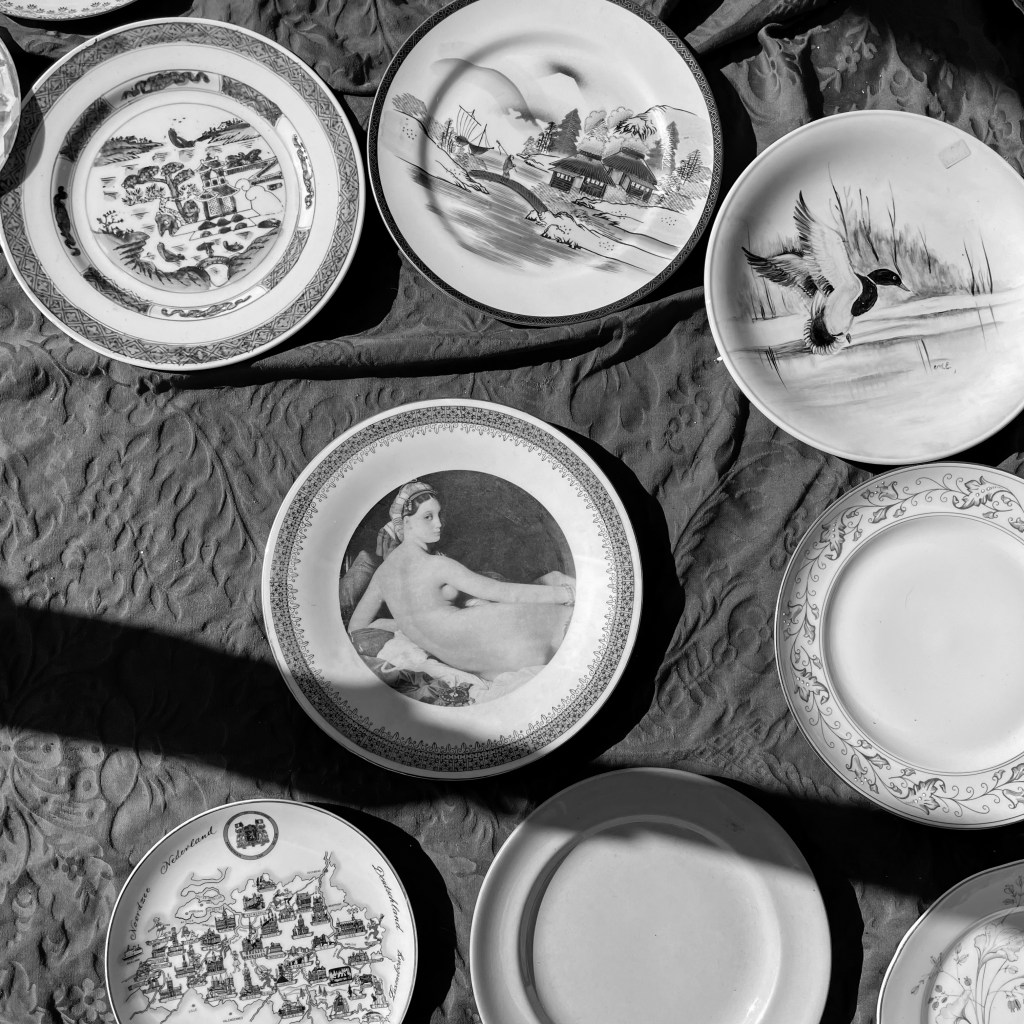
“You live your life as if it’s real… The evidence accumulates that you’re not running the show. You still have to make choices as if you were running the show, but you make your choices with the intuitive understanding that it’s unfolding as it must… And if you can relax in that… if you can even touch it, or if it asserts itself from time to time, then the invincible defeat is transcended.”
– Leonard Cohen
I make it all perfect. I arrange my hair, slip into my black silk lounge dress and floral kimono, feminine and lovely. I spray my French perfume once on my chest and once at the nape of my neck, so my hair can soak it in. I count my calories and I wash my face, make sure the black from my mascara isn’t under my eyes. I clean under my fingernails and make sure my nails are shining and there are no nicks in my clear nail polish. I vacuum the floor and clean the mirror, no trace of dust bunnies or water marks. I put the food away in cabinet and wipe the counter. Put my shoes in the closet and hang my handbag with the latch closed. I sweep my balcony and empty the ashtray and straighten the chairs. I make my bed and dust the shelves, organize the books and magazines. I hang my coat and wipe my sunglasses clean for tomorrow. I shake out the bathroom mat and hang the towels neatly. I put my gold away in the little geometric Persian jewelry box. I listen to Bach and imagine I’m floating through the world, light as a feather and walking along an invisible thread, a set trajectory that nobody, including myself, can see — but we don’t decide, the piano keys do.
They bounce my thoughts up and down and suddenly I wonder why I’m alone. Then I remember I chose to be. All their faces, all their bodies and thoughts and movements, so big, so loud, so real, so imposing around me I can’t hear myself think. And when I can’t hear myself think I get dragged into the undertow without realizing. Then I wake up one day and I can’t think at all and I’m thrown this way and that and I don’t know which way is up anymore and I don’t remember where I came from. Not my home or where I live or lived but my center. The quiet of me alone in a dance studio late at night listening to my headphones spinning round and round for hours, walking at night with the cobblestones gleaming after a brief drizzle.
I come from the quiet, I always have. “Renata alone and quiet in her room,” my grandmother writes of me, a poem to describe each grandchild. I come from the quiet and the dark. I need the dark to find my way to the light within. When the sunlight comes in too harshly through the windows I can’t think, it’s just like when they’re around. I need the dark — quiet and gentle.
I’m from countless nights spent pacing back and forth starring up at the sky, that impenetrable limitless expanse of nothingness. Cursing the dawn, but always secretly waiting for it to arrive — to come and take away this burden — this empty weight of the silence and the dark closing in. But I need it, I never knew a sweeter lover than that weight, it never asked anything of me but to be there. It wanted me so badly it stole me away from everything else. It was never impressed by what I had or did, only who I was.
Sometimes I ask myself how this happened, how did I get so comfortable in the stillness, to crave so sharply the softness and quiet order I construct around myself my like a cocoon? Then I remember it’s always been this way. “The invincible defeat.”
I come from the secluded bench in a big damp European city park, much like any other. After I’ve run enough to exhaust myself I lay down on my back and stare up at the tops of the bare trees, black veins pulsing on a grey sky. I imagine them spinning around me, I’m the eye of the hurricane. My hands rest on my stomach and I’m panting. They are closing in on me, I imagine. But they’re not — just a foolish fairytale, delusions of grandeur. Life is not so simple.
I’m from those moments when one accidentally says something too revealing in a passing conversation, scaring themselves but still stealing a sideways glance at the other to see their reaction. That glance of hopeful terror. That glance that even if you feel it on you, the most loving thing you can do is to pretend you don’t notice it while taking the other’s vulnerability to heart, in stride.
I’m from that delicious lost moment when you jolt awake on a trans-country train and somewhere between sleeping and waking it takes you a bit too long to remember who you are and where you are and that you’re on a train and you’re a person and others expect to see you eventually and you’re on your way somewhere and why you’re going there. And you enjoyed those few brief moments of non-being bliss a bit too much and feel a pang of grief but then you glance at your phone and realize you’re still 30 minutes away from your destination — you have 30 more minutes to be a non-entity, so you feel your bones rest a little gentler in your cushioned window seat.
I’m from the river that the train runs along. Clear cold water, calm in its chaos, its constantly replenished impermanent yet perpetual existence.
I need to remember. If I don’t I forget the thread, I falter and the piano notes begin to feel like punches to the jaw. I need to remember, so I can touch it and transcend and every glance of vulnerability doesn’t have to be acknowledged and yet is absorbed none the less.
There will never be a sweeter lover than the night. But the burden of love is heavy, and while there is no greater reprieve than the darkness, only the dawn within can lift the weight. I need to remember.
Become a paid subscriber to get access to the rest of this post and other exclusive content.
“And the day came when the risk to remain tight in a bud was more painful than the risk it took to blossom. Life is a process of becoming, a combination of states we have to go through. Where people fail is that they wish to elect a state and remain in it. This is a kind of death… Life is truly known only to those who suffer, lose, endure adversity and stumble from defeat to defeat.”
– Anais Nin, The Diary of Anais Nin, Vol. 1: 1931-1934
“She stood still, slightly darker than the darkness, and their hands met as if guided by some perfected instinct which found no place in their conscious minds.”
– Lawrence Durrell, The Alexandrian Quartet, Justine
Dear F,
I’ve tried so hard to think of my favorite moment, favorite thing that you’ve done, favorite scene we’ve acted out together, but there are are many. Too many one liners to start or finish your story, our story. Maybe that’s all you were really, a one liner – all I permitted myself to be at the time, all I could bear to be. I wanted to be a period at the end of a sentence and collapse into myself and let that be it. And you let me. Oh how you let me. But then I began to expand, without my knowing it, and that was the beginning of the end of us. Of you, of the you that’s only ever existed through my eyes, the you I conceived to be my sentence, the you I composed so beautifully in place of myself.
I’ve tried so hard to think or know if you knew it or know it now. Sometimes I know you do, sometimes I don’t. Sometimes I convince myself that I felt it, that you felt it. Sometimes I think you must of.
Now I don’t care anymore. I don’t care anymore because I know now that even if all my projections onto our scenes were mutual, even if it meant something to you, that meaning wouldn’t mean anything to you. And while I agree with your emotional nihilism in theory – that’s no way to live a life.
For all my mistakes, I know at least that I have always fought to live my life in opposition to Hegel’s sub-man, a being who wishes to eliminate the anxiety they feel when confronted by their freedom and therefore denies the world and themselves. A being whom Beauvoir writes is, “afraid of engaging himself in a project as he is afraid of being disengaged and thereby of being in a state of danger before the future, in the midst of possibilities.” This unforeseen future which he fears, “may remind him of the agonizing consciousness of himself.” A nihilistic being who anyone whom has ever wrestled with themselves and the void alone can see straight through – through to the “disappointed seriousness which has turned back upon itself.”
In any case – fear, agony, and nihilism aside – I, in the face of such indecision when confronted with the overwhelm of catch phrases and iconic vignettes we created together, will just have to start at the beginning.
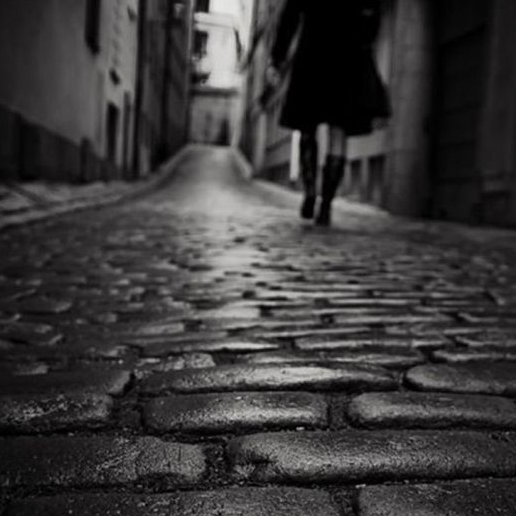
From the beginning: a Tuesday night at the end of October on the wet cobblestone steps before Sainte-Catherine de Bruxelles. There where I waved to you as you approached and could only see my dark silhouette in my uniformed black trench and boots. From the beginning, when the greying stubble on your cheeks scraped mine as you gifted me your Italian ‘il bacetto’ greeting.
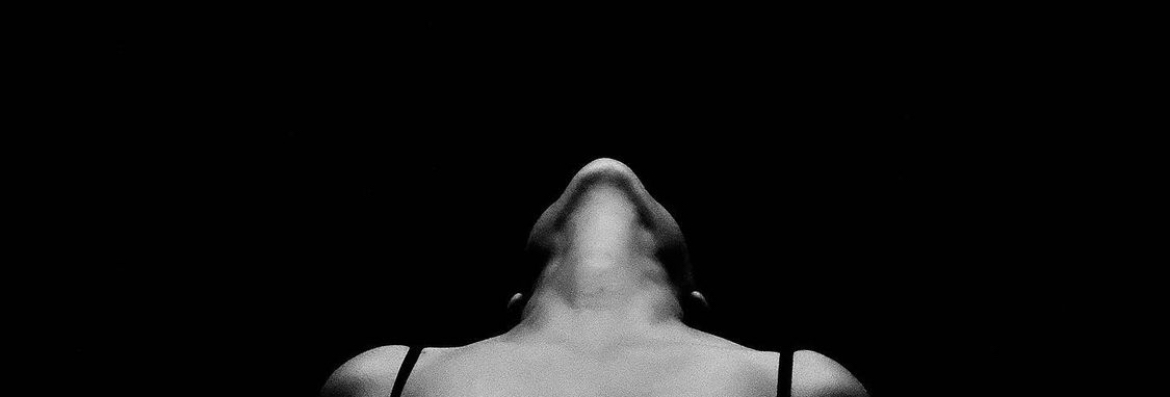
“Solitude is independence. It has been my wish and with the years I had attained it. It was cold. Oh, cold enough! But it was also still, wonderfully still and vast like the cold stillness of space in which the stars revolve… From a dance-hall there met me as I passed by the strains of lively jazz music, hot and raw as the steam of raw flesh.”
– Hermann Hesse, Steppenwolf
Solitude always comes first. For most it’s the few moments spent brushing their teeth and washing their face in the morning, or alone in the car and up in the elevator to the office, or walking the grocery store isles on the way home – maybe even later eating dinner in front of a screen. But for some, like me and some other scattered Steppenwolfs, solitude is where we first matured and where we go to become ourselves. Like him, all I’ve ever wished for with each passing year is more solitude and independence. Not long ago now, my wish was granted and I found it as cold and vast as he describes. Yet it quickly became the kind of cold that suffocates you, and I found that its dark stillness isn’t the dark one thinks of in contrast to light, it was the darkness of the absence of light, where no contrast exists at all.
Solitude came first, and then the hot raw steam of flesh, where everything became permitted like a manic but somehow soothing and controlled free jazz improvisation.
Here will live my shamelessly unfiltered stories of the unabashed deep penetration I’ve experienced of my body and self – all that the darkness squeezed out – told in amateur stream of consciousness style and interwoven with bits and pieces of all my friends who wait to greet me in my solitude in the form of books, films, art, and music.
Tales of my delicately sordid life, dispatched from my solitude. I think on the topic of each Steppenwolf would have agreed with Bob Dylan in saying, “you must pick one or the other though neither of them are to be what they claim.”
 Solitude and Sex