“You live your life as if it’s real… The evidence accumulates that you’re not running the show. You still have to make choices as if you were running the show, but you make your choices with the intuitive understanding that it’s unfolding as it must… And if you can relax in that… if you can even touch it, or if it asserts itself from time to time, then the invincible defeat is transcended.”
– Leonard Cohen
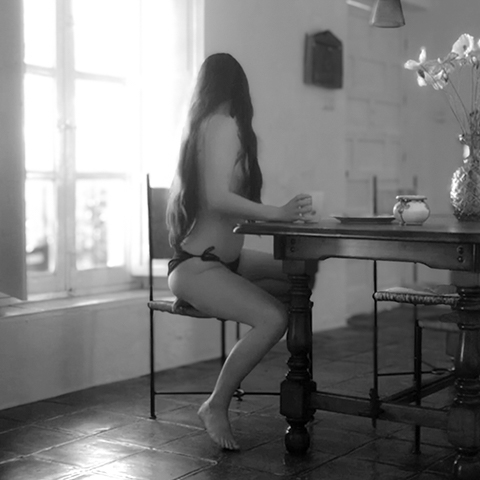
I make it all perfect. I arrange my hair, slip into my black silk lounge dress and floral kimono, feminine and lovely. I spray my French perfume once on my chest and once at the nape of my neck, so my hair can soak it in. I count my calories and I wash my face, make sure the black from my mascara isn’t under my eyes. I clean under my fingernails and make sure my nails are shining and there are no nicks in my clear nail polish. I vacuum the floor and clean the mirror, no trace of dust bunnies or water marks. I put the food away in cabinet and wipe the counter. Put my shoes in the closet and hang my handbag with the latch closed. I sweep my balcony and empty the ashtray and straighten the chairs. I make my bed and dust the shelves, organize the books and magazines. I hang my coat and wipe my sunglasses clean for tomorrow. I shake out the bathroom mat and hang the towels neatly. I put my gold away in the little geometric Persian jewelry box. I listen to Bach and imagine I’m floating through the world, light as a feather and walking along an invisible thread, a set trajectory that nobody, including myself, can see — but we don’t decide, the piano keys do.
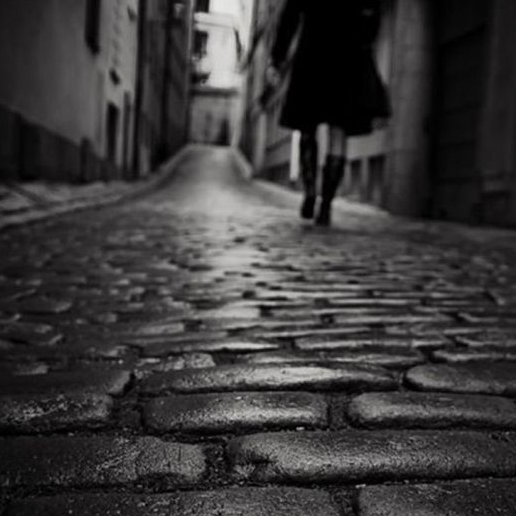
They bounce my thoughts up and down and suddenly I wonder why I’m alone. Then I remember I chose to be. All their faces, all their bodies and thoughts and movements, so big, so loud, so real, so imposing around me I can’t hear myself think. And when I can’t hear myself think I get dragged into the undertow without realizing. Then I wake up one day and I can’t think at all and I’m thrown this way and that and I don’t know which way is up anymore and I don’t remember where I came from. Not my home or where I live or lived but my center. The quiet of me alone in a dance studio late at night listening to my headphones spinning round and round for hours, walking at night with the cobblestones gleaming after a brief drizzle.
I come from the quiet, I always have. “Renata alone and quiet in her room,” my grandmother writes of me, a poem to describe each grandchild. I come from the quiet and the dark. I need the dark to find my way to the light within. When the sunlight comes in too harshly through the windows I can’t think, it’s just like when they’re around. I need the dark — quiet and gentle.
I’m from countless nights spent pacing back and forth starring up at the sky, that impenetrable limitless expanse of nothingness. Cursing the dawn, but always secretly waiting for it to arrive — to come and take away this burden — this empty weight of the silence and the dark closing in. But I need it, I never knew a sweeter lover than that weight, it never asked anything of me but to be there. It wanted me so badly it stole me away from everything else. It was never impressed by what I had or did, only who I was.
Sometimes I ask myself how this happened, how did I get so comfortable in the stillness, to crave so sharply the softness and quiet order I construct around myself my like a cocoon? Then I remember it’s always been this way. “The invincible defeat.”
I come from the secluded bench in a big damp European city park, much like any other. After I’ve run enough to exhaust myself I lay down on my back and stare up at the tops of the bare trees, black veins pulsing on a grey sky. I imagine them spinning around me, I’m the eye of the hurricane. My hands rest on my stomach and I’m panting. They are closing in on me, I imagine. But they’re not — just a foolish fairytale, delusions of grandeur. Life is not so simple.
I’m from those moments when one accidentally says something too revealing in a passing conversation, scaring themselves but still stealing a sideways glance at the other to see their reaction. That glance of hopeful terror. That glance that even if you feel it on you, the most loving thing you can do is to pretend you don’t notice it while taking the other’s vulnerability to heart, in stride.
I’m from that delicious lost moment when you jolt awake on a trans-country train and somewhere between sleeping and waking it takes you a bit too long to remember who you are and where you are and that you’re on a train and you’re a person and others expect to see you eventually and you’re on your way somewhere and why you’re going there. And you enjoyed those few brief moments of non-being bliss a bit too much and feel a pang of grief but then you glance at your phone and realize you’re still 30 minutes away from your destination — you have 30 more minutes to be a non-entity, so you feel your bones rest a little gentler in your cushioned window seat.
I’m from the river that the train runs along. Clear cold water, calm in its chaos, its constantly replenished impermanent yet perpetual existence.
I need to remember. If I don’t I forget the thread, I falter and the piano notes begin to feel like punches to the jaw. I need to remember, so I can touch it and transcend and every glance of vulnerability doesn’t have to be acknowledged and yet is absorbed none the less.
There will never be a sweeter lover than the night. But the burden of love is heavy, and while there is no greater reprieve than the darkness, only the dawn within can lift the weight. I need to remember.

 Solitude and Sex